Search This Blog

Showing posts with label Osso Bucco. Show all posts

Saturday, April 08, 2017

Local Beef Shank Osso Bucco for CBC's Weekend Morning Show

This morning I presented the following recipe for CBC's Weekend Morning Show with interim host, Nadia Kidwai.  The beef shank is a beautiful product, full of flavour, and this recipe is easy to prepare.  The trick to this and most recipes, is to prepare your Mise en Place, or, have everything ready to go.


Osso Bucco:
1 cup all-purpose flour
Sea salt and freshly ground black pepper
4 pieces Beef Shank (I used Wildfire Farms and Manitoba Beef shanks available at St. Norbert's Farmer's Market)
Extra-virgin olive oil
3 tablespoons unsalted butter
1 onion, diced
1 celery stalk, diced
2 carrots, diced
1 lemon, zest peeled off in wide strips with a vegetable peeler
1 head garlic, cut horizontally through the middle
2 bay leaves
1/4 cup chopped fresh flat-leaf parsley
1 sprig fresh thyme
1 bottle dry red wine
1 (14 1/2-ounce) can low-sodium beef broth (I had homemade chicken broth on hand instead)
1 (28-ounce) can whole San Marzano tomatoes, hand-crushed (I used 6 frozen garden grown Roma Tomatoes)

Put the flour in a large shallow platter and season it with a fair amount of salt and pepper. Dredge the meat in the seasoned flour and then tap off the excess (extra flour will burn and make the dish off-tasting).

Heat a large Dutch oven over medium heat and hit it with a 3-count drizzle of oil. Add the butter and swirl it around the pan to melt. Sear the meat, turning carefully with tongs, until all sides are a rich brown caramel color. Drizzle with a little more oil, if needed. (Do this in batches if the shanks are large and look crowded in the pot.) Remove the browned meat to a side plate. There will be a lot of flavor left over in the bottom of the pot. You're going to use that to create your sauce.

Preheat the oven to 375 degrees F.

Using the same pot, sauté the onion, celery, carrots, lemon zest, garlic, bay leaves, and parsley over medium heat. Cook the vegetables down until they start to get some color and develop a deep, rich aroma. Season with salt and pepper; add a little oil if needed. Nestle the meat back in the pot. Pour in the wine and let it simmer down for 20 minutes, until the wine has reduced by half. Reducing is key for intense flavor. Add the beef broth and tomatoes and stir everything together. Cover the pot and put it in the oven. Braise for 1 and a 1/2 hours. Then remove the cover and continue to cook for another 30 minutes. The sauce should be thick and the meat tender and nearly falling off the bone.
Remove bay leaves.

Enjoy!

Friday, December 05, 2014

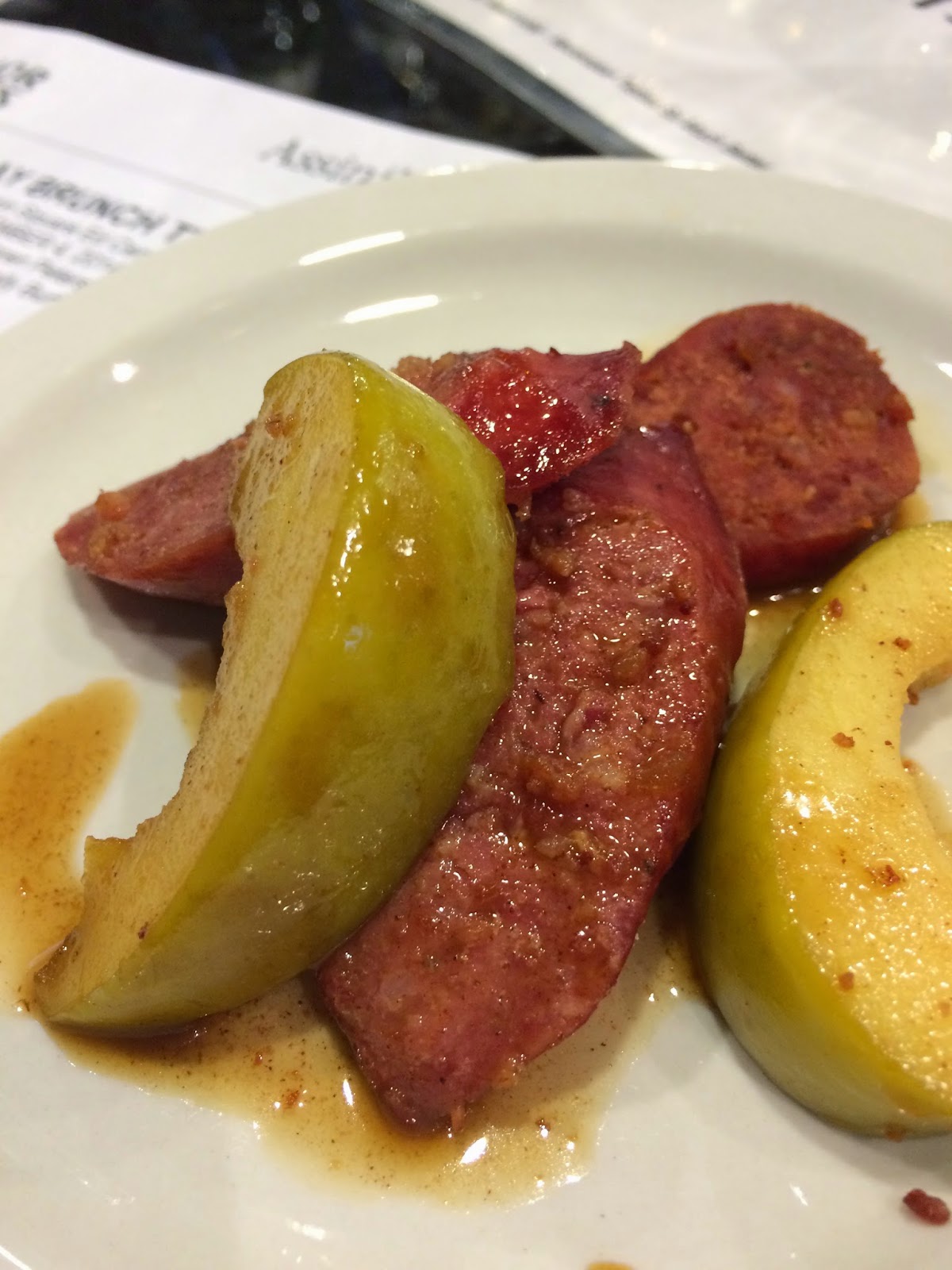
Saturday on CBC's Weekend Morning Show - Brandied Farmer's Sausage with honeyed apples


 I will be presenting the following recipe tomorrow on CBC's Weekend Morning Show with host Terry MacLeod.  This isn't your Dad's Farmer's Sausage.  It is, a take on a Spanish Tapa.  Great for holiday entertaining.

Enjoy!

Brandied Farmer’s Sausage with apples

1-2 Farmer’s sausages, sliced on the bias ~ 1”  ( I used Pioneer sausage, low salt easy peel)
2-3 apples, cut into thin wedges  (I used Granny Smith)
2 tbs butter (Local Notre Dame butter!)
½ cup honey
¼ tsp cinnamon
good pinch black pepper
Brandy, to deglaze (or your favourite non-cream liquor)  I used a Polish, Old Krupnik honey liquor

Heat skillet and add Farmer’s sausage and butter and brown.  Half way through cooking, add apples, honey and cinnamon.  Cook until meat is fully cooked.  Add Brandy or favourite liquor.

To serve, skewer or lay out on platter with toothpicks.

Later, I will be demonstrating Tajine cooking at D.A. Niels with the following recipes;


Moroccan Squash Tajine

1 small butternut, hubbard or winter squash, peeled and chopped into bite-sized pieces
1 medium chopped red pepper
1/4 cup chopped black olives
1/4 cup chopped dates
1 medium onion, chopped
1 head garlic (loose cloves)
2 tbs olive oil
juice of half a lemon
1 tbs turmeric
1 heaping tablespoon Ras El Hanout *
Splash of Rosewater**
1/2 chopped pickled lemon (just the peel)***
Pinch of salt
Optional: eggplant, zucchini

Place all ingredients together in a casserole dish (traditional cooking vessel is a tajine). Cover and bake at 350F for about 45 minutes. If cooking on the stovetop, cook covered at medium heat for about 30 minutes or until the vegetables are fork tender. Serve with rice or couscous or bulgur.

Enjoy!


Osso Bucco
 
 1 cup all-purpose flour
Sea salt and freshly ground black pepper
4 pieces Beef shank (call for fresh at Millad's Grocery Mart on Notre Dame)
Extra-Virgin Olive Oil
1-3 tbs butter
1 onion, diced
1 celery stalk, diced
2 carrots, diced
1 lemon, zest peeled off in wide strips with a vegetable peeler
1 head garlic, cut horizontally through the middle
2 bay leaves
1/4 cup chopped fresh flat-leaf parsley
1 sprig fresh thyme
1 bottle dry red wine (use an Amarone related wine for fullest flavour)
1 (14 1/2-ounce) can low-sodium beef broth (I had homemade chicken broth on hand instead)
1 (28-ounce) can whole San Marzano tomatoes, hand-crushed

Put the flour in a large shallow platter and season it with a fair amount of salt and pepper. Dredge the meat in the seasoned flour and then tap off the excess (extra flour will burn and make the dish off-tasting).

Heat a large Dutch oven over medium heat and hit it with a 3-count drizzle of oil. Add the butter and swirl it around the pan to melt. Sear the meat, turning carefully with tongs, until all sides are a rich brown caramel color. Drizzle with a little more oil, if needed. (Do this in batches if the shanks are big and look crowded in the pot.) Remove the browned meat to a side plate. There will be a lot of flavor left over in the bottom of the pot. You're going to use that to create your sauce.

Preheat the oven to 375 degrees F.

Using the same pot, sauté the onion, celery, carrots, lemon zest, garlic, bay leaves, and parsley over medium heat. Cook the vegetables down until they start to get some color and develop a deep, rich aroma. Season with salt and pepper; add a little oil if needed. Nestle the meat back in the pot. Pour in the wine and let it simmer down for 20 minutes, until the wine has reduced by half. Reducing is key for intense flavor. Add the beef broth and tomatoes and stir everything together. Cover the pot and put it in the oven. Braise for 1 and a 1/2 hours. Then remove the cover and continue to cook for another 30 minutes. The sauce should be thick and the meat tender and nearly falling off the bone.
Remove bay leaves.

Enjoy!

Wednesday, April 30, 2014

Italian countryside for the Assiniboine Park Conservancy at the MLCC


 Last night I presented the following recipes for the Assiniboine Park Conservancy's Foodie Program with the MLCC on the theme of Italian Countryside.  Kelly Burton, Product Consultant for the MLCC, provided wonderful beverage pairings and Melissa Scouten, Education Coordinator for the APC, presented on the plants and culture of different regions.
 Photos to follow soon!

 Reception Beverage:  Limoncello Lemonade
1/2 cup frozen lemonade concentrate, thawed
1/4 cup fresh mint leaves
2 tbs fresh lemon juice
1 cup club soda, divided
2 cups limoncello, divided
1 cup St. Germain (elderflower liquor)
Ice cubes, crushed


1. Fave con Pecorino
(serves 4)
Paired with Ruffino Orvieto Classico #31062, $11.95

2 lbs fava beans, peeled
4 ounces Pecorino Toscano, sliced into 1/2 inch/1 cm long matchstick-thick segments
1/4 cup olive oil
fine sea salt
freshly ground black pepper
2 leaves radicchio, sliced very thinly

Place the fava beans and pecorino in a small mixing bowl. Drizzle the olive oil over the top and season with salt and pepper. Toss very gently, just to combine the flavours and not to break the beans or crush the cheese.
Mound a quarter of the beans and cheese in the centre of each salad plate. Top each serving with a few slivers of radicchio.

2. Sage Butter pasta (Burro e salvia)
Paired with Gabbiano Chianti DOCG # 710324, $13.99

1/3 cup butter.
Bunch of fresh sage leaves
1/2 cup grated Parmesan
Black pepper.

Wash and dry the sage leaves. Melt the butter in a saucepan and add the sage. Cook very gently over a low flame taking care not to let the butter burn. Pour over cooked pasta and stir through well together with freshly grated parmesan. This super-quick sauce is ideal with 'naked ravioli' (ravioli filling without the pasta) but is also suitable with any short pasta. In this case, drain the cooked pasta keeping back a little of the water. Return the pasta to the saucepan, add the sage and butter and stir over a low heat for a minute.

Remove from the heat and stir in a good helping of grated Parmesan.

The sauce should look smooth and creamy; if it has dried out too much, add a few drops of milk or fresh cream. Grind a little black pepper over when serving.

Enjoy!


3. Recipe courtesy Alex Guarnaschelli
Eggplant Parmigiana Eggplant Parmigiana

Paired with Feudo Badala Negroamano #15086, $11.82

Ingredients
The Sauce:
1/4 cup extra-virgin olive oil
3 medium yellow onions, peeled, halved, and cut into thin slices
6 cloves garlic, peeled and grated
Kosher salt
1 tablespoon crushed red pepper flakes
1 tablespoon granulated sugar
3 (28-ounce) cans San Marzano whole plum tomatoes
The Eggplant:
2 medium eggplants, washed and cut into 1/2-inch thick rounds (about 2 1/2 pounds)
1/2 cup all-purpose flour
Freshly ground black pepper
5 large eggs
3 tablespoons whole milk
4 cups Italian-style breadcrumbs
1 tablespoon dried oregano
1 tablespoon fresh thyme leaves
Vegetable oil, for frying, as needed, about 1 1/2 to 2 cups
1 1/2 pounds mozzarella cheese, cut into thin slices
1/2 cup grated Parmesan
1 pound provolone cheese, grated
2 handfuls fresh basil, leaves only, torn

Directions

For the tomato sauce: In a large skillet, heat the olive oil over medium-high heat. Add the onion and garlic and season with salt and red pepper flakes. Cook until the onions become translucent, 3 to 5 minutes. Add the sugar and the canned tomatoes. Use a wooden spoon to break up some of the whole tomatoes and cook 10 to 15 minutes over medium heat, stirring from time to time. Taste for seasoning, the tomatoes should be fairly broken down and the flavors coming together. Cook for another few minutes if the tomatoes still taste like they need a little more time to break down. Set aside to cool.

Put the flour in a medium bowl and season with salt and pepper. In another bowl, whisk together the eggs and milk and season with salt and pepper. In a third bowl, combine the breadcrumbs with the oregano and fresh thyme leaves and season with salt and pepper. Dip each eggplant slice in the flour and shake off any excess. Then, dip in the egg mixture, and finally in the breadcrumbs. Make sure to coat both sides of each slice of eggplant. Arrange them in single layers on the baking sheets.

In a large skillet, pour enough oil to accumulate about 1/2-inch in the bottom. Heat the oil until it begins to smoke lightly (alternatively, test with a thermometer and wait until the oil registers between 380 degrees F and 400 degrees F). Use a pair of kitchen tongs to add a single layer of the eggplant to the pan. Cook them until they are golden brown, about 2 minutes on each side. Remove from the oil and transfer to a baking sheet fitted with a kitchen towel so the eggplant can drain as the others cook. Season lightly with salt. Take care to reheat the oil back up to temperature before adding another batch of slices to the pan.

Preheat oven to 350 degrees F.

To assemble: In a 9 by 13-inch baking dish, spoon about 1/4 of the tomato sauce on the bottom. Top with a layer of the fried eggplant; the eggplant slices can overlap slightly. Top with about 1/3 of the mozzarella slices. Sprinkle with about 1/4 of the Parmesan and provolone cheeses. Top with a layer of torn basil leaves. Spoon sauce and repeat the layering 2 more times to make 3 layers. End with the remaining mozzarella. Carefully press the layers down firmly into the dish once assembled. Place the dish in the top part of the oven and cook until the cheese is melted and bubbly, 35 to 40 minutes.

4. Osso Bucco
Paired with Masi Costasera Amarone #317057, $44.99
 
 1 cup all-purpose flour
Sea salt and freshly ground black pepper
4 pieces Beef, Bison or Elk shank
Extra-Virgin Olive Oil
1-3 tbs butter
1 onion, diced
1 celery stalk, diced
2 carrots, diced
1 lemon, zest peeled off in wide strips with a vegetable peeler
1 head garlic, cut horizontally through the middle
2 bay leaves
1/4 cup chopped fresh flat-leaf parsley
1 sprig fresh thyme
1 bottle dry red wine
1 (14 1/2-ounce) can low-sodium beef broth (I had homemade chicken broth on hand instead)
1 (28-ounce) can whole San Marzano tomatoes, hand-crushed

Put the flour in a large shallow platter and season it with a fair amount of salt and pepper. Dredge the meat in the seasoned flour and then tap off the excess (extra flour will burn and make the dish off-tasting).

Heat a large Dutch oven over medium heat and hit it with a 3-count drizzle of oil. Add the butter and swirl it around the pan to melt. Sear the meat, turning carefully with tongs, until all sides are a rich brown caramel color. Drizzle with a little more oil, if needed. (Do this in batches if the shanks are big and look crowded in the pot.) Remove the browned meat to a side plate. There will be a lot of flavor left over in the bottom of the pot. You're going to use that to create your sauce.

Preheat the oven to 375 degrees F.

Using the same pot, sauté the onion, celery, carrots, lemon zest, garlic, bay leaves, and parsley over medium heat. Cook the vegetables down until they start to get some color and develop a deep, rich aroma. Season with salt and pepper; add a little oil if needed. Nestle the meat back in the pot. Pour in the wine and let it simmer down for 20 minutes, until the wine has reduced by half. Reducing is key for intense flavor. Add the beef broth and tomatoes and stir everything together. Cover the pot and put it in the oven. Braise for 1 and a 1/2 hours. Then remove the cover and continue to cook for another 30 minutes. The sauce should be thick and the meat tender and nearly falling off the bone.
Remove bay leaves.

Enjoy!


Wednesday, January 23, 2013

Foods of Italy for the Assiniboine Park Conservancy and the MLCC


Last night I had the great pleasure of presenting the following recipes for a cooking demonstration for the Assiniboine Park Conservancy at the Madison Square  MLCC.  Beverage pairings to follow soon.  APC Education Coordinator Bonnie Tulloch presented on the great plants used in cooking in Italian food and Cindy, Product Consultant of the MLCC provided excellent beverage pairings.  
Photos coming today!

Come in to Arkadash Bistro and Lounge to try these items or many others. 

Foods of Italy – January 22, 2013

1. Tuscan Squash Salad

1 lb squash (butternut, hubbard, or any small firm variety except spaghetti), peeled, seeded and cut in 5-inch slices
2 tsp extra virgin olive oil
3 tbs honey, warm and divided into two parts
½ cup chopped walnuts
2 tbs lemon juice
2 tbs walnut oil
½ tsp kosher or sea salt
¼ tsp ground black pepper
~ 6 cups mixed baby greens, lightly packed
½ cup crumbled feta

Preheat oven to 400ºF. Toss the squash and olive oil in a large bowl. Spread on a parchment-lined baking sheet and lightly brush with half of the honey. Bake for 15 minutes. Turn and brush with the remaining honey. Bake for another 15 minutes or until the squash is cooked through. Some varieties take longer to cook.

While the squash is baking, toast the walnuts lightly. Whisk together the lemon juice, walnut oil, salt and pepper in a small bowl.

Toss the greens with the vinaigrette in a large bowl and place on serving plates. Top with 3-5 slices of squash. Sprinkle with the walnuts and feta, season and serve while the squash is still warm.

2. Sage Butter pasta (Burro e salvia)

1/3 cup butter.
Bunch of fresh sage leaves
1/2 cup grated Parmesan
Black pepper.

Wash and dry the sage leaves. Melt the butter in a saucepan and add the sage. Cook very gently over a low flame taking care not to let the butter burn. Pour over cooked pasta and stir through well together with freshly grated parmesan. This super-quick sauce is ideal with 'naked ravioli' (ravioli filling without the pasta) but is also suitable with any short pasta. In this case, drain the cooked pasta keeping back a little of the water. Return the pasta to the saucepan, add the sage and butter and stir over a low heat for a minute.

Remove from the heat and stir in a good helping of grated Parmesan.

The sauce should look smooth and creamy; if it has dried out too much, add a few drops of milk or fresh cream. Grind a little black pepper over when serving.

Enjoy!

3. Osso Bucco
This is the adaptation of Tyler Florence’s recipe for Osso Bucco. The wine that he recommended using was Amarone. Personally, I'd really rather enjoy drinking the Amarone  but have used it today especially for your pleasure.
It makes an elegant winter comfort meal.

Osso Bucco:
 1 cup all-purpose flour
Sea salt and freshly ground black pepper
4 pieces Beef, Bison or Elk shank
Extra-Virgin Olive Oil
1-3 tbs butter
1 onion, diced
1 celery stalk, diced
2 carrots, diced
1 lemon, zest peeled off in wide strips with a vegetable peeler
1 head garlic, cut horizontally through the middle
2 bay leaves
1/4 cup chopped fresh flat-leaf parsley
1 sprig fresh thyme
1 bottle dry red wine
1 (14 1/2-ounce) can low-sodium beef broth (I had homemade chicken broth on hand instead)
1 (28-ounce) can whole San Marzano tomatoes, hand-crushed

Put the flour in a large shallow platter and season it with a fair amount of salt and pepper. Dredge the meat in the seasoned flour and then tap off the excess (extra flour will burn and make the dish off-tasting).

Heat a large Dutch oven over medium heat and hit it with a 3-count drizzle of oil. Add the butter and swirl it around the pan to melt. Sear the meat, turning carefully with tongs, until all sides are a rich brown caramel color. Drizzle with a little more oil, if needed. (Do this in batches if the shanks are big and look crowded in the pot.) Remove the browned meat to a side plate. There will be a lot of flavor left over in the bottom of the pot. You're going to use that to create your sauce.

Preheat the oven to 375 degrees F.

Using the same pot, sauté the onion, celery, carrots, lemon zest, garlic, bay leaves, and parsley over medium heat. Cook the vegetables down until they start to get some color and develop a deep, rich aroma. Season with salt and pepper; add a little oil if needed. Nestle the meat back in the pot. Pour in the wine and let it simmer down for 20 minutes, until the wine has reduced by half. Reducing is key for intense flavor. Add the beef broth and tomatoes and stir everything together. Cover the pot and put it in the oven. Braise for 1 and a 1/2 hours. Then remove the cover and continue to cook for another 30 minutes. The sauce should be thick and the meat tender and nearly falling off the bone.
Remove bay leaves.

Enjoy!

4. Chocolate Almond Biscotti

Recipe By: Karen
Serving Size: 36

1/2 c butter softened
3/4 c sugar
2 eggs
4 tsps  Frangelico
1 tsp vanilla extract
2 c +2tsp white flour unbleached
1 1/2 tsps baking powder
1/4 tsp salt
1/4 c Sliced Almonds
¾ cup chocolate chips


Preheat oven to 325ºF. Cream butter until fluffy and add sugar. Cream again until fluffy and add the eggs, beating well until mixture is smooth. Mix in Frangelico and vanilla. Combine flour, baking powder and salt in a bowl. Beat into butter mixture until just incorporated. Stir in almonds and chocolate.
Divide the dough into 3 equal pieces on a lightly floured board. Roll pieces into long cylinders about 1 - 1 1/2inches in diameter. Place on a baking sheet and flatten to rectangles. Bake until light brown, about 25 minutes.
Cool the rolls and slice diagonally to make 1/2 inch biscotti. Lower oven temperature to 300ºF, lay the slices on the baking sheet and bake for 10 minutes. Turn the slices over and bake until dry, about 5-10 minutes. Cool and store in an airtight container.

Enjoy!

Friday, January 21, 2011

Italian Countryside with the Assiniboine Park Conservancy and the MLCC

On Wednesday evening, I had the pleasure of presenting a few recipes from around the Italian countryside with Bonnie Tulloch, Education Coordinator for the Assiniboine Park Conservancy and Gary Dawyduk,Product Ambassador of the MLCC. I added a few surprises in the mix as well that can be found on this blog such as Sage Butter Pasta and a variation of biscotti with cranberries, walnuts and blood oranges and zest.(Click on biscotti labels for some variations in this blog)

Bonnie presented on the flora of the Italian countryside that was represented in the recipes and Gary presented excellent beverage pairings for each course, including a welcoming cocktail and after dinner digestivo.

Aperitivo:
Negroni cocktail:

1 oz. London Dry Gin (Quintessential, #540419, $25.86)
1 oz. Sweet Vermouth (Cinzano, #422, $11.49)
1 oz. Italian Bitters (Cynar, #5299, $23.85)
Stir with ice and strain into cocktail glass, ¾ filled with ice
Garnish with orange slice


1. Bruschetta con pomodoro e basilico

This is bruschetta in its simplest, tastiest form.

The next step in bruschetta assembly is rubbing the toasted bread with garlic, before or after sprinkling on the olive oil, and adding a pinch of salt.

Paired with Prosecco – Zonin (#6017) $13.28
* Italian or French bread, cut in 1/2 inch slices
* fresh, ripe, firm tomato, washed and coarsely chopped
* fresh basil leaves, whole or shredded
* olive oil, extra virgin, the best
* garlic, peeled, whole (optional)
* salt to taste

Grill or toast bread. Charcoal is great!

Place sliced bread under the broiler, in the toaster or best yet over a charcoal grill and toast.

Rub toast with a clove of garlic or not, depending on taste.

Drizzle with olive oil.

Spoon chopped tomato onto bread.

Scatter some basil. Alternatively, place the tomatoes, basil, garlic (chopped fine), olive oil and salt in a bowl and mix.

Set bowl at table alongside the toasted bread and simply spoon on mixture.

Some prefer to use sliced rather than chopped tomato.

2. Farfalle with Onion Confit, Gorganzola and Walnuts

Paired with Gewurztraminer 2009 – Fetzer (#350843) $14.99 and 1488 Whisky Ale – Tullilbardine (#10420, 500 ml) $7.33

(serves 2-4)
1 tbs extra virgin olive oil
2 medium-sized onions, thinly sliced
salt and pepper
2 garlic cloves, finely chopped
1/4 cup dry white wine
1/2 lb farfalle
1/3 cup fresh basil
3 tbs, walnut pieces, toasted
1 ounce Gorgonzola

Heat olive oil in a wide skillet. Add the onions and pinch of salt. Sauté over medium heat for about 10 minutes, until the onions begin to soften and release their juices. Add the garlic and continue to cook over medium heat, gently stirring as they caramelize. After 30 minutes, the onions should be a rich golden colour and sweet. Add wine to deglaze the pan ad simmer over low heat.

Boil pasta as per instructions. Chop or break the toasted walnuts. Before draining pasta, add a 1/4 cup of cooking water to the confit. Add the drained pasta to the confit with walnuts and basil. Season and crumble in cheese. Serve immediately.


3.Elk Osso Bucco:

Paired with Dolcetto d’Alba 2007 – Damilano (#9722) $26.99 and Rioja Reserva 2005 – Montecillo (#802108) $20.97

1 cup all-purpose flour
Sea salt and freshly ground black pepper
4 pieces Beef, Bison or Elk for osso bucco
Extra-virgin olive oil
3 tablespoons unsalted butter
1 onion, diced
1 celery stalk, diced
2 carrots, diced
1 lemon, zest peeled off in wide strips with a vegetable peeler
1 head garlic, cut horizontally through the middle
2 bay leaves
1/4 cup chopped fresh flat-leaf parsley
1 sprig fresh thyme
1 bottle dry red wine
1 (14 1/2-ounce) can low-sodium beef broth (I had homemade chicken broth on hand instead)
1 (28-ounce) can whole San Marzano tomatoes, hand-crushed (I used 6 frozen garden grown Roma Tomatoes)

Put the flour in a large shallow platter and season it with a fair amount of salt and pepper. Dredge the meat in the seasoned flour and then tap off the excess (extra flour will burn and make the dish off-tasting).

Heat a large Dutch oven over medium heat and hit it with a 3-count drizzle of oil. Add the butter and swirl it around the pan to melt. Sear the meat, turning carefully with tongs, until all sides are a rich brown caramel color. Drizzle with a little more oil, if needed. (Do this in batches if the shanks are big and look crowded in the pot.) Remove the browned meat to a side plate. There will be a lot of flavor left over in the bottom of the pot. You're going to use that to create your sauce.

Preheat the oven to 375 degrees F.

Using the same pot, sauté the onion, celery, carrots, lemon zest, garlic, bay leaves, and parsley over medium heat. Cook the vegetables down until they start to get some color and develop a deep, rich aroma. Season with salt and pepper; add a little oil if needed. Nestle the meat back in the pot. Pour in the wine and let it simmer down for 20 minutes, until the wine has reduced by half. Reducing is key for intense flavor. Add the beef broth and tomatoes and stir everything together. Cover the pot and put it in the oven. Braise for 1 and a 1/2 hours. Then remove the cover and continue to cook for another 30 minutes. The sauce should be thick and the meat tender and nearly falling off the bone.


4. Lemon Gelato with Amaretto cookie

Paired with Maximo Marche Bianco 2006 – Ronchi (#10955, 375 ml) $24.45

Lemon Gelato:

Ingredients:

3/4 cup (150 g) sugar
1 pint (500 ml) water
The zest of a half a lemon
The juice of three lemons
An ice cream machine
Preparation:

Bring the sugar, water and lemon zest to a boil and let simmer for 10 minutes. Let the mixture cool, stir in the lemon juice, and make the sherbet, following the instructions given by the manufacturer of your ice cream machine.

Yield: 6 servings lemon gelato.

Variations: you can also make lime sherbet, substituting limes for lemons, or orange sherbet, using the juice of three oranges and one lemon. If you choose to make the latter, reduce the sugar somewhat since oranges are naturally sweeter than lemons or limes.

Amaretti cookies

Ingredients

2 egg whites
1 cup (250 mL) granulated sugar
1/4 tsp (1 mL) almond extract
2-1/2 cups (625 mL) ground almonds
Topping:
2 tbsp (25 mL) granulated sugar
Preparation:

In large bowl, beat egg whites until soft peaks form; beat in sugar, 2 tbsp (25 mL) at a time, until stiff glossy peaks form. Beat in almond extract; fold in ground almonds.

Drop by generous 1 tbsp (15 mL) or pipe using piping bag, 2 inches (5 cm) apart, onto parchment paper–lined baking sheets.

Topping: Sprinkle sugar over cookies. Bake in top and bottom thirds of 300°F (150°C) oven, rotating and switching pans halfway through, for about 20 minutes or until firm to the touch and light golden. Transfer to rack; let cool completely. (Make-ahead: Store layered between waxed paper in airtight container for up to 3 days.)


Digestivo: Frangelico Liqueur (#8546) $23.97

Saturday, December 01, 2007

Elk Osso Bucco

I made this yesterday using a beautiful piece of Elk Osso Bucco. Its adapted from Tyler Florence's recipe but instead of veal shank, which I'm not crazy about using, I used Elk that is raised quite locally in Stonewall, Manitoba. The wine that he recommended using was Amarone. Personally, I'd really rather enjoy drinking the Amarone and have used a less expensive version, Il Bastardo, a poor-man's version that is quite lovely. The One Hundred Milers can use the local Raspberry wine which matches beautifully with the elk.

I also neglected to photograph this lovely dish. I served it with baguettes. You can reduce all of the ingredients for fewer pieces of meat. I made one piece that served 2 people.

It makes an elegant winter comfort meal.

Osso Bucco:
1 cup all-purpose flour
Sea salt and freshly ground black pepper
4 pieces Beef, Bison or Elk for osso bucco
Extra-virgin olive oil
3 tablespoons unsalted butter
1 onion, diced
1 celery stalk, diced
2 carrots, diced
1 lemon, zest peeled off in wide strips with a vegetable peeler
1 head garlic, cut horizontally through the middle
2 bay leaves
1/4 cup chopped fresh flat-leaf parsley
1 sprig fresh thyme
1 bottle dry red wine
1 (14 1/2-ounce) can low-sodium beef broth (I had homemade chicken broth on hand instead)
1 (28-ounce) can whole San Marzano tomatoes, hand-crushed (I used 6 frozen garden grown Roma Tomatoes)

Put the flour in a large shallow platter and season it with a fair amount of salt and pepper. Dredge the meat in the seasoned flour and then tap off the excess (extra flour will burn and make the dish off-tasting).

Heat a large Dutch oven over medium heat and hit it with a 3-count drizzle of oil. Add the butter and swirl it around the pan to melt. Sear the meat, turning carefully with tongs, until all sides are a rich brown caramel color. Drizzle with a little more oil, if needed. (Do this in batches if the shanks are big and look crowded in the pot.) Remove the browned meat to a side plate. There will be a lot of flavor left over in the bottom of the pot. You're going to use that to create your sauce.

Preheat the oven to 375 degrees F.

Using the same pot, sauté the onion, celery, carrots, lemon zest, garlic, bay leaves, and parsley over medium heat. Cook the vegetables down until they start to get some color and develop a deep, rich aroma. Season with salt and pepper; add a little oil if needed. Nestle the meat back in the pot. Pour in the wine and let it simmer down for 20 minutes, until the wine has reduced by half. Reducing is key for intense flavor. Add the beef broth and tomatoes and stir everything together. Cover the pot and put it in the oven. Braise for 1 and a 1/2 hours. Then remove the cover and continue to cook for another 30 minutes. The sauce should be thick and the meat tender and nearly falling off the bone.
Remove bay leaves.

Enjoy!